
Amber’s second chance
Originally published in the Nelson Weekly, September 2026
Jenny had been thinking about adopting an older dog for years. When retirement came, the plan was simple, give a dog who might otherwise be harder to rehome the happiest life possible. Two months later, Amber’s photo appeared on Facebook. She was at the pound, a small white Maltese cross with loving eyes and an uncertain past. When she first arrived home, Amber was quiet but calm. She found her bed, settled herself down and quietly began making the place her own.
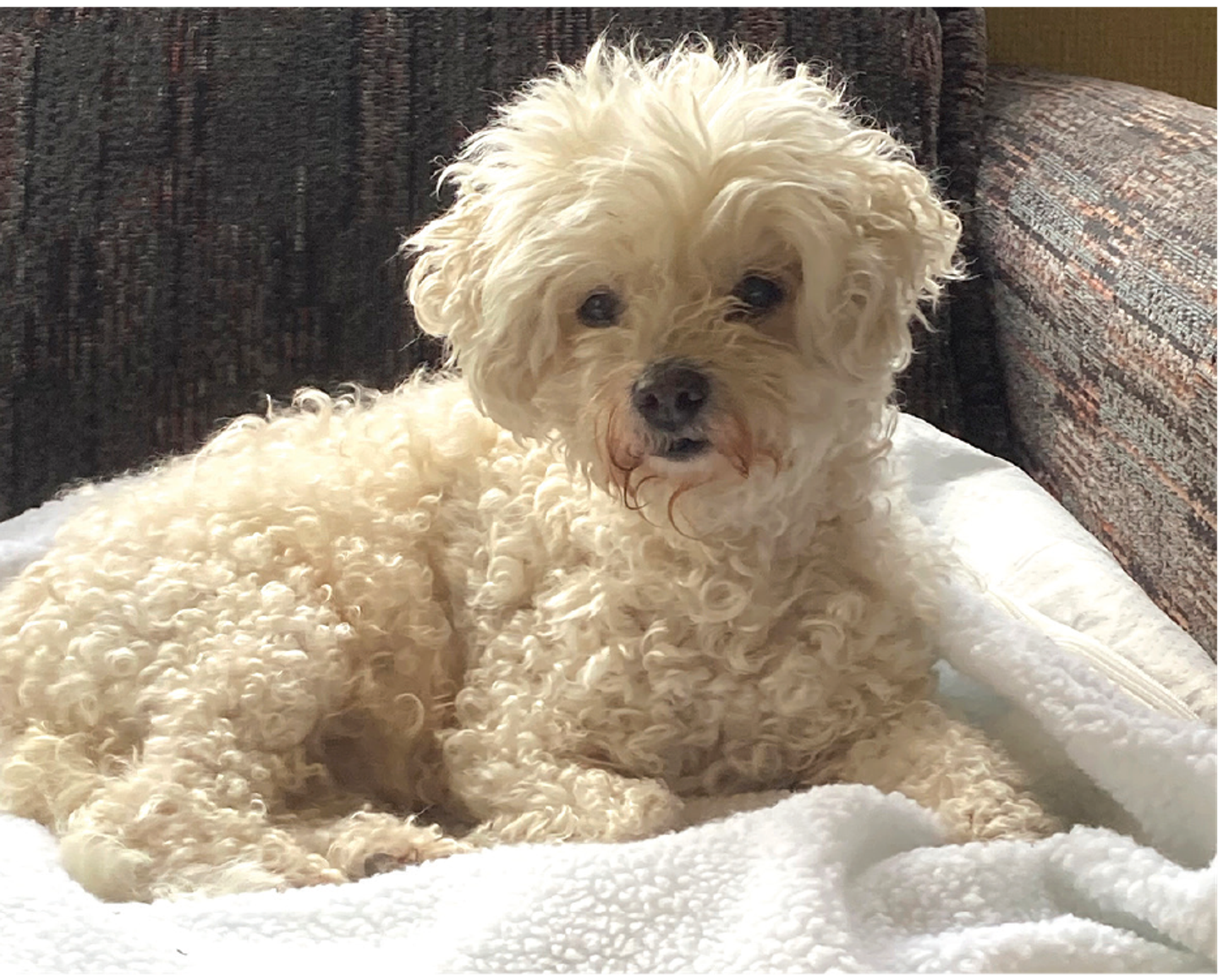
Her owner knew from the beginning that Amber came with some health issues. Before the adoption, the pound staff showed her Amber’s veterinary report, including concerns about her teeth and heart. She understood what she was taking on. There would be vet visits, costs and some decisions to make. But she had always wanted to give an older dog a good retirement, and Amber seemed to have arrived at exactly the right time.
Once Amber was home, it became clear that her mouth was causing her trouble. Her breath was terrible. She didn’t chew much and would often gulp her food whole, sometimes gagging. She also had some skin problems and a badly matted coat. On top of all that, Amber had a known heart murmur.
At Nelson Vets, Amber’s care was carefully planned with her owner. Her dental disease was uncomfortable and needed treatment, but her heart condition meant an anaesthetic couldn’t be treated as routine. The risks and benefits were discussed, with the goal of improving Amber’s comfort while making the procedure as safe as possible.
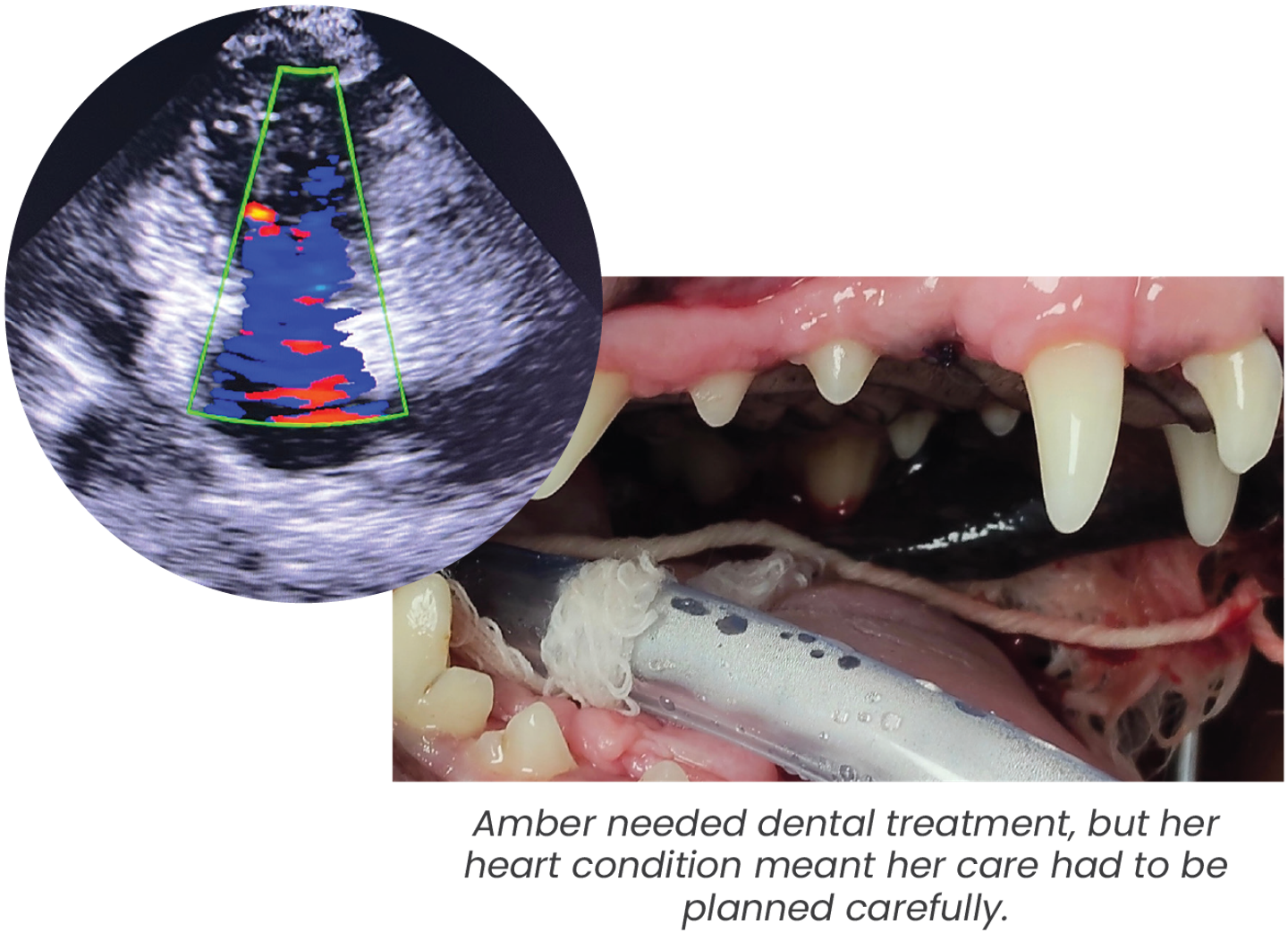
Amber had a heart scan with Dr Melanie to better understand what was causing the heart murmur. The scan showed mitral valve disease, a common heart condition in older, small-breed dogs. She was started on medication to help her heart function and once she was more stable, she returned for her dental procedure with Dr Stephanie.
Her anaesthetic plan was tailored specifically to her heart condition. She had blood tests beforehand, received her heart medication on the day, and was given oxygen before and after the procedure. Her anaesthetic drugs, fluids and pain relief were carefully chosen, and local anaesthetic was used in her mouth so the team could keep her general anaesthetic as light as possible. Throughout the procedure, Amber was closely monitored by vet nurse Roxy.
Dental X-rays revealed several diseased teeth that needed to be removed. Those teeth were extracted, and the remaining teeth were cleaned and polished. Dental pain in pets isn’t always obvious. Many dogs and cats will continue eating despite having a sore mouth. They may swallow food whole, chew on one side, develop bad breath or simply become a little quieter over time.
For Amber’s owner, the decision ultimately came down to quality of life. Amber had settled into her new home and was already part of the family. The difference afterwards was wonderful to see. Once her mouth was comfortable and her heart medication had begun helping her feel better, Amber became brighter and perkier. Her owner noticed a real change. The quiet little rescue dog even started getting the ‘zoomies’!
These days, Amber has made herself very much at home. She has an orthopaedic bed and she is particularly fond of big European pillows. She enjoys cloth snuffle mats with treats hidden inside and has established her own daily routine, after her morning walk, she likes to go for a ride in the car.
For her owner Jenny, one of the loveliest parts has been the bond that has developed between them, the walks they take together, the quiet companionship and Amber’s calm, trusting nature.
“Adopting an older dog has been even more wonderful and rewarding than I imagined,” Amber’s owner says. Retirement together has turned out pretty well for both of them.
- Dr Stephanie Gadd